Then:

Now:

Then:

Now:


 It was nice to see the radishes sprout and be all perky. Interesting how distinctly red the hypocotyl is.
 The root seems pretty long for a week old sprout. The sprout was very tasty with a spicy kick.
 Dave had some with roots growing out the bottom of the six pack.
 And here is the proud father.
 Several other seeds had germinated and emerged: basil, some parsley, and some california poppy.
 I was surprised to see fully opened flowers on one of my strawberry plants. They all were then summarily snipped to redirect their energy to root development. Silly strawberries!
 I was pretty discouraged about the snake plant until I looked closely and found four distinct, if small, roots protruding. So, there is hope yet.
 By contrast the dogwood was going great guns with both root and leaf development.
 Here is Sarah checking in on her plants.
 In the hoop house the main action was with the siberian iris, which seemed to be doing nicely. Everything else seemed pretty dormant.
 We gathered a crew to clean up the pile of nursery pots.
 Here is some of the team proud of a job well done.


 still not a lot of action with the leaf cuttings.
 The Cornus cuttings are leafing out. But the Thuja are still not showing any activity.
 I took a peek and the Cornus are putting on roots.
 There is one cute little flower or fruit on the strawberry. I should have plucked it to keep the energy focused on root development -- but it was too cute. The foliage is looking very happy.
 The snake plant isn't really doing anything. No roots, at least at first glance. If you look really close you might convince yourself there are some adventitious root tips forming.
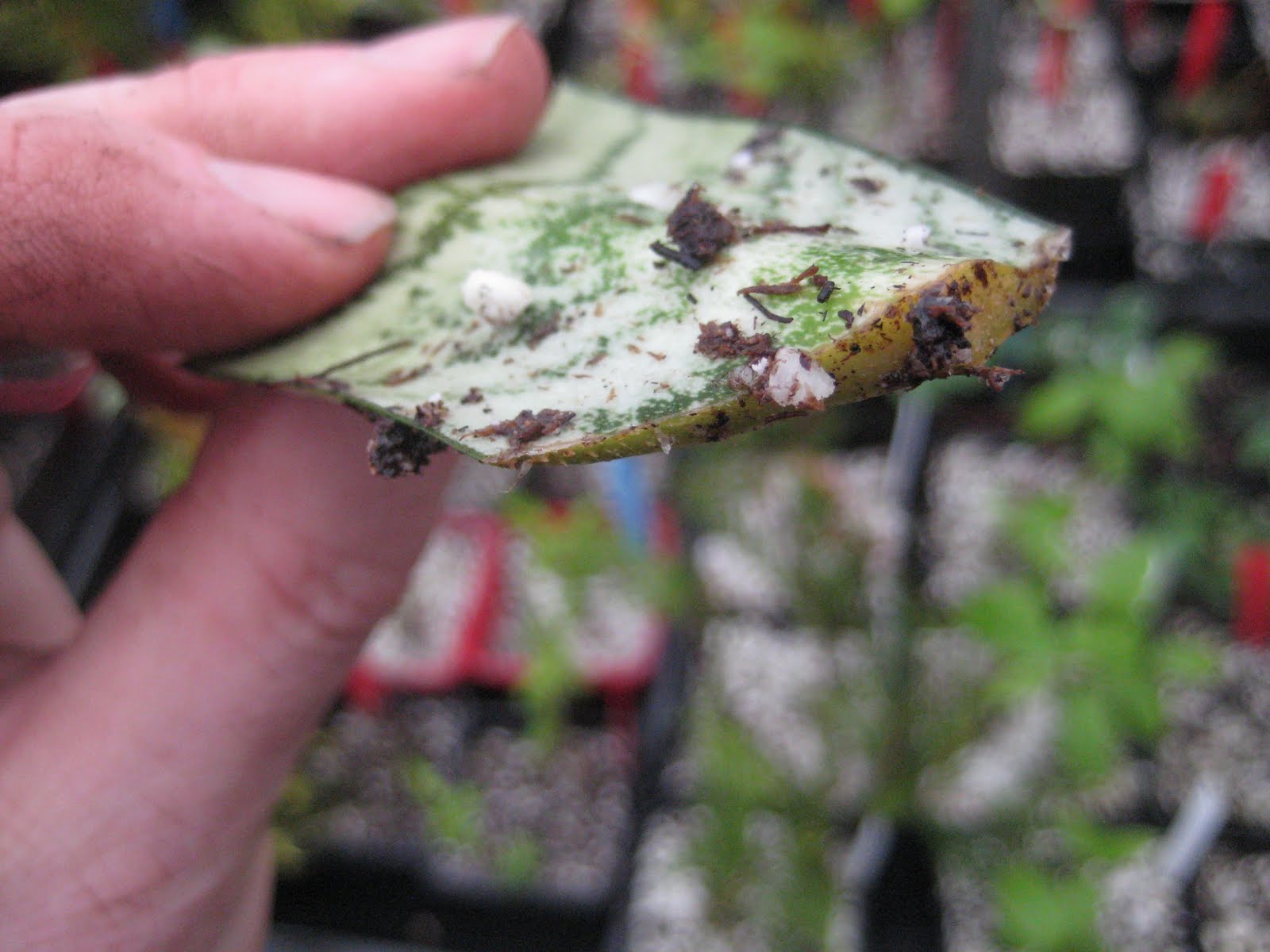 At least it hasn't rotted away as I feared it might a few weeks ago.
We've got to find a way to make this
fit into the hole for this
... using nothing but that.
 David introduced us to the M111 Malus root stock.
 And the Golden Delicious scion wood we would be grafting to it.

 The main tool for the day was an as-sharp-as-you-could-get-it grafting knife. We practiced several grafts: cleft, whip & tongue, veneer, and saddle. First up the cleft graft, accommodating smaller scion wood.
 A whip & tongue graft with a nice tight fit.
 A veneer graft on the side of the stem.
 And the trickiest to do by hand, the saddle graft.
 Here are all four wrapped up in stretchy tape.
 With the practice over, we worked directly on the root stock. Exposed surfaces were coated with grafting wax.
 And off to the hoop house to wait for callus to form.
He who can properly define and divide is to be considered a god.
--Plato
 We started by tackling a patch of Iris sibirica near Building 7.
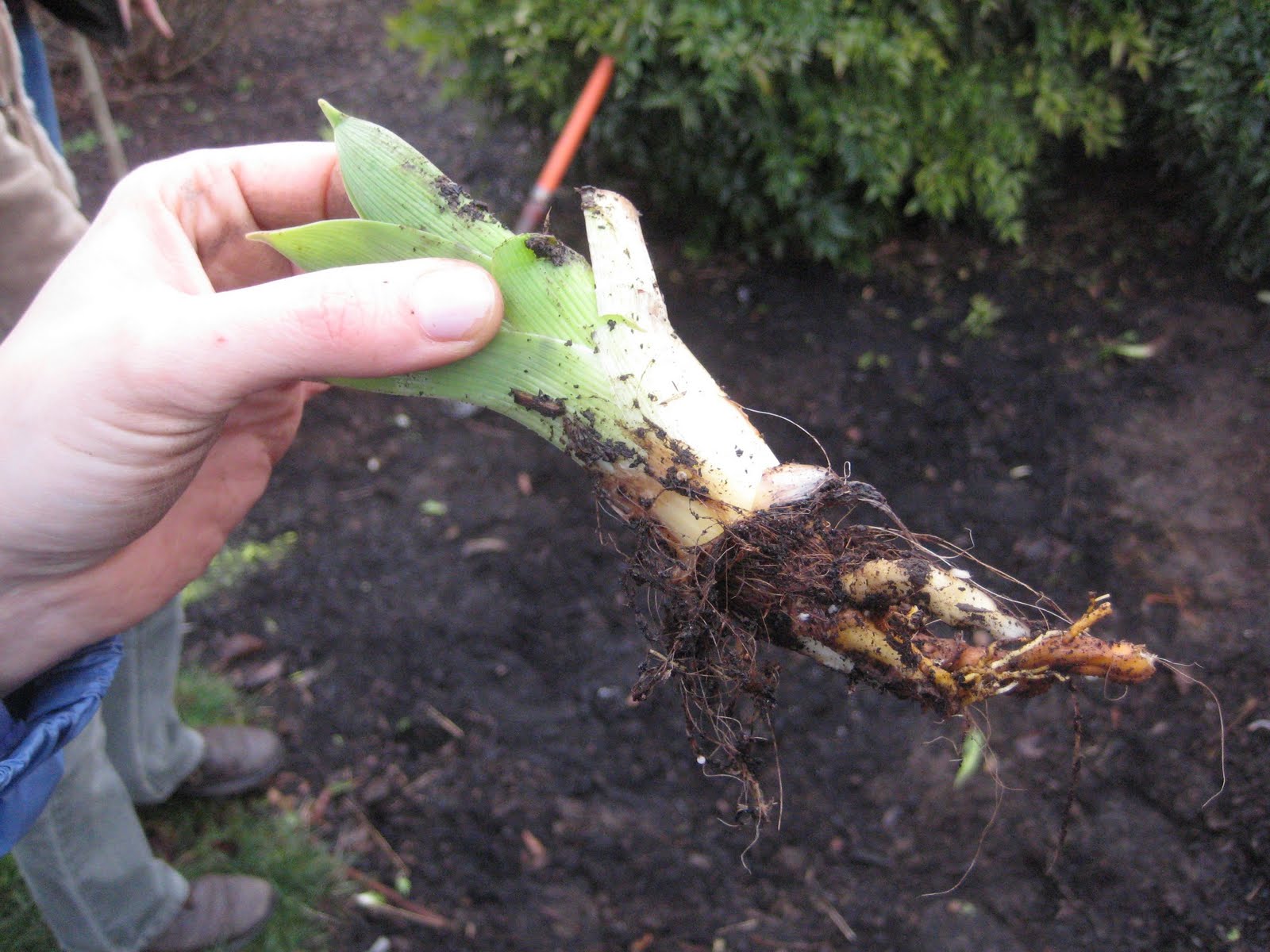 A couple students working together with shovels would dig out a patch, break off most of the bulk soil, and place it on the garden cart. When we were done, we planted back several smaller clumps to fill in the area.
 That's a nice looking pile on the cart.
 We brought out a variety of tools including rakes to smooth out the soil and rake away debris.
 Some of the tools ended up a little the worse for wear.
 After dividing them up some more, we potted them up into mostly 1-gallon pots and placed them in the hoop house. Also on the menu was some Panicum virgatum 'Hans Hermes' and Hemerocallis (pictured).


